
How Much Can Car Leasing Save You?

How Much Can Car Leasing Save You?

How Much Can Car Leasing Save You?

leasing versus purchasing

The Answer : A Lot! Prepare To Be Amazed!

More and more people are turning to car leasing for their own personal use. In fact, it’s the biggest growth area in acquiring a new car. Why is this though?

Well the answer is it can be a lot cheaper – and for most vehicles it should be cheaper – to get a Personal Contract Hire agreement (leasing) over a Personal Contract Purchase agreement – which is what a main dealership would normally offer.

Now of course, the thing to bear in mind here is that we are legally obliged to say that everybody’s personal circumstances are different and you should always weigh up your options based on your own needs.

But is there really that much difference?

A Comparison.

We wanted to highlight the potential savings of leasing a car over purchasing one through a Personal Contract Purchase agreement.  Here you normally pay a deposit, a fixed monthly amount and then a “balloon” payment (the GFV – Guaranteed Future Value) at the end to buy the car outright – or hand the car back.

We got 3 PCP quotes on 3 different vehicles to compare against our PCH terms.

We wanted to look at a broad cross section of cars – picking a large executive saloon, a mid-sized family car and the last one was a popular small, 1 litre eco-box.

Frankly, the results are staggering.
fleet cars

The Figures…

PCH - PCP savings

Now, the first thing we should say are that these figures are obviously dependent on personal circumstances. Credit rating and your personal circumstances can affect the amounts in both instances.

The deposits shown in these figures show the PCH deposit being matched to the deposits quoted for the PCP figures for a like-for-like comparison.

But still it certainly does start to explain the shift towards car leasing. It also seems that the more expensive the car, the bigger savings to be had – with a more than 50% saving on the BMW.

So Why The Huge Difference?

The Difference Between PCH & PCP

With a PCH you are paying for something different than a PCP. With a PCH agreement you are paying for the anticipated depreciation value of the vehicle for the term you have it for (usually 3-4 years).

With a PCP agreement you have the option to purchase. This means that after the agreement term you need to make a final payment to buy the car outright – or you hand it back.

The main reason though for the difference in cost is that with PCH agreements, the manufacturers provide extra levels of support on special offer deals.

deals on Fleet cars and vans

So What’s The Catch?

As my old man always used to say – there’s no such thing as a free lunch – or in this case a cheaper lunch.

The catch with PCH is of course that you don’t actually own the vehicle as you have to return the car at the end of the agreement – there is no option to buy it outright.

There are terms of use as well. So you will have a mileage limit to adhere to – based on your needs. The car also has to be returned in a good condition – but these also apply to PCP agreements.

BUTHere’s the good news!

  • At the end of the term, you can get another new car for the same or similar fixed fee.
  • You don’t have to worry about the depreciation value of the car.
  • You don’t have to worry about that final payment and;
  • You don’t have to worry about the rigmarole of selling the car to get a new one – or losing out heavily on trade-in value.

So if you are like the increasing number of motorists acquiring new vehicles each year – and can handle the fact that you won’t actually own the car – you can save a lot of money on your monthly motoring costs.

Choosing Cheshire Fleet Solutions.

As we have shown we can get fantastic Personal Contract Hire deals. We have access to literally thousands of cars of most makes and models. We’re not the sort of company who will spend all day uploading all the cars to our website – we like to speak to people.

If you would like to find out more about leasing your next car, pick up the phone, give us a call on  01543 229722 or email us using the form below and tell us what car you need – and we’ll find one for you. 

|

“After using Matt at Cheshire Fleet Solutions to purchase a Peugeot Expert van for my business last year and I am now delighted to say we have just taken delivery of our new Mazda CX5 as our family car. The whole process was very easy and after shopping around also very competitive. We are now looking forward to hassle free motoring for the next three years. We would highly recommend this company to both personal and business customers.”

Adrian Booth

Get In Touch

Data Protection - important, please read.

1 + 15 =

More Great Deals On Cars

We can source cars from thousands of makes and models. Looking for something in particular? No problem. Get in touch and we’ll find you a great deal.

Personal Contract Hire prices INCLUDING VAT Images are for illustration purposes only.
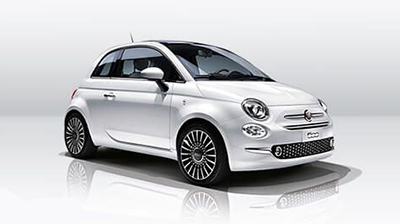
 

Fiat Abarth 500 1.4T -Jet 145 3DR

£194.24 Per Month

Details
  • Engine: 1199cc – Petrol
  • Transmission: Manual
  • MPG (Combined): 47
  • CO2 Emissions: 151.0 g/km
  • Road Tax: £140

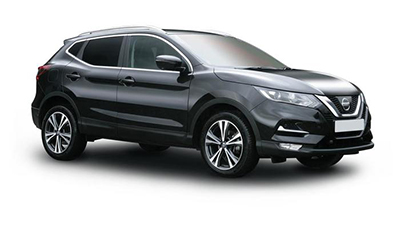
Nissan Qashqai 1.5 dCi N-Connecta

£238.80 Per Month

Details
  • Engine: 1461cc – Diesel
  • Transmission: Manual
  • MPG (Combined): 70.6
  • Emissions: 103.0 g/km
  • Road Tax: £20

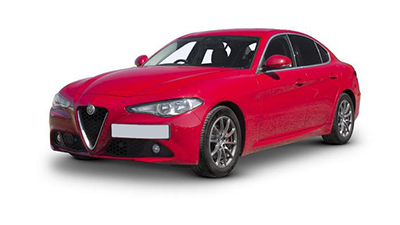
ALFA ROMEO GIULIA 2.0TB 280 Veloce

£417.59 Per Month

Details
  • Engine: 1995cc – Diesel
  • Transmission: Automatic
  • MPG (Combined): 40.9
  • Emissions: 160.0 g/km
  • Road Tax: £500

Interested in Leasing Your Next Car? Call Now On 01543 229722

Cheshire Fleet Solutions introduce business to Total Fleet Services, Total Vans and Total Cars of Security House, Littleton Drive, Huntington, Cannock WS12 4TS which are trading names of Hanborough Enterprises Ltd. We are an Appointed Representative (Firm Reference Number 823971) of Hanborough Enterprises Ltd who is authorised and regulated by the Financial Conduct Authority for consumer credit activities (Firm Reference Number 631448). You can check this on the FCA Register by visiting www.fca.org.uk or by contacting the FCA direct on 0300 500 8082. We are an independent vehicle finance broker and we operate with a panel of carefully selected funders. We may receive commission and/or other benefits from the finance provider if you enter in to an agreement with them.

Cheshire Fleet Solutions registered trading address is 5 Exeter Close, Cheadle Hulme, Stockport, Cheshire SK8 6JE. Vat no 507 9518 96. Data Protection Licence ZA463684

We are a Credit Broker and not a Funder or a Lender
Electric Car Battery Availability Concerns Raised

Electric Car Battery Availability Concerns Raised

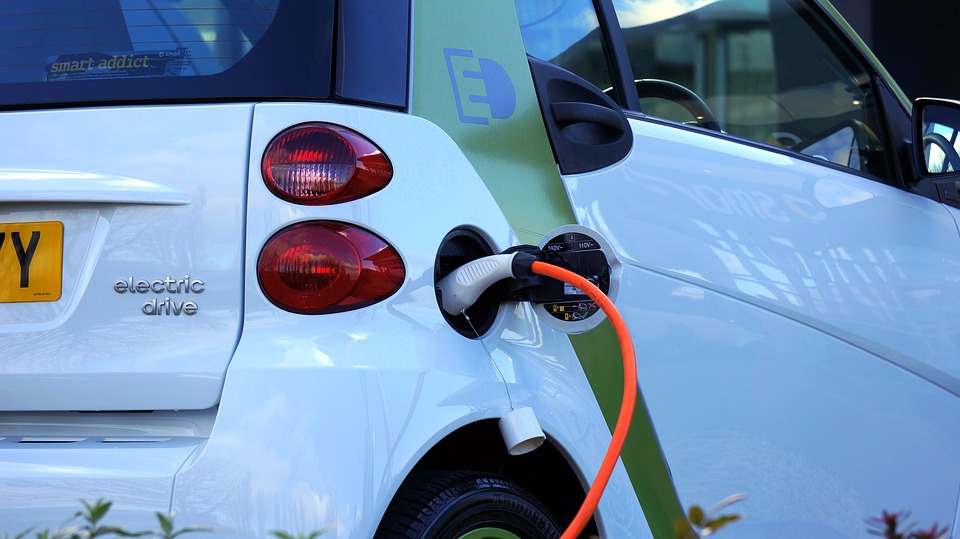
The Demand For Electric Cars Is Piling Pressure on Supplies For Electric Car Batteries.

With the switch to Electric vehicles gathering pace there are musings in the industry that car-makers may struggle to meet the growing demand. One of the main stumbling blocks seems to be the availability and supply of electric car batteries. 

The main issue is that whilst there are lithium-ion battery factories in Europe, they do not make the cells. These are supplied by Asian companies, such as Samsung, Panasonic, CATL and LG Chem. So how can these issues of supply and demand be tackled? 

What Are The Car-Makers Saying?

Peugeot

Peugeot chairman and CEO, Carlos Tavares, has been urging the European Parliament to provide the necessary support to instigate production in the EU for the past year.

Peugeot are pressing on with their dedication to the electric car. They anticipate that 12% of 208 registrations next year, (approx 2,400 units) will be the full electric version – the e-208. The car-maker is also starting plans for a future where every car and van model will have an electric option within four years.

Deliveries of the new small car will start at the end of the year or the beginning of 2020. Reservations will be opening in March and orders from the summer.

Peugeot UK managing director David Peel said: “We are confident we will have the supply that we need to meet our forecast demand.

Kia

Battery supply is one of the main reasons why orders for Kia’s full electric e-Niro has outstripped its UK allocation. The carmaker hopes the situation will improve for 2020 as it prepares for the new Soul EV.

Kia has taken just more than 1,000 orders for its allocation of 1,000 e-Niros, with deliveries commencing in the next couple of months. Dealers are telling customers that they are looking at quarter one 2020 if they order now. 

Paul Philpott – Kia Motors UK Chief Executive Officer told Fleet News;  

“We have to be upfront with them, although we are trying to secure more production,” It’s a global supply chain, not just Europe or the UK and battery supply can’t keep pace with demand, which is growing at a significant rate. We have to manage the situation but we can’t say when it will free-up. Our customers are prepared to wait.”

European carmakers are working hard to bring battery supply closer to home. Germany has earmarked €1 billion (£860 million) to support a consortium looking to produce EV battery cells.

BMW & VW

There are also plans to fund a research facility to develop next-generation solid-state batteries. More than 30 companies have applied, including BMW and the Volkswagen Group.

The latter recently announced plans to make 22 million EVs within the next 10 years – seven million more than its original ambition 

The number of new electric models it plans to launch within the same timescale has increased from 50 to 70.

Volkswagen will start taking reservations for its first ID model – the manufacturer’s new family of electric cars – in May, almost six months before the car is unveiled at autumn’s Frankfurt Motor Show.

The hatchback will start from less than €30,000 (£25,700) and it will have a range of up to 342 miles.

However, the manufacturer’s board member for sales, Jurgen Stackman admitted: “Given the interest in the ID family shown by our dealers, I think it is possible the launch edition will already have sold out before we unveil it in September.”

What Else is Being Done To Speed Things Up?

Recognising a growing demand for EVs and the batteries to power them, the European Commission set up the European Battery Alliance (EBA) in 2017.

Its objective is to create a competitive manufacturing value chain in Europe, with sustainable battery cells at its core, and to prevent a technological dependence on the block’s competitors.

It also wants to capitalise on the job growth and investment potential of batteries, which could be worth up to €250bn (£214bn) a year to the EU from 2025 onwards.

Would you like to find out more about electric vehicles available? Call us on  07971 865102 for the latest deals on electric and hybrid cars. 

ISA Speed Limiter Amongst Vehicle Safety Features Set To Become Standard

ISA Speed Limiter Amongst Vehicle Safety Features Set To Become Standard

Speed Limiter & Automated Breaking To Become Standard Features.

Cars, vans, lorries and buses being sold fitted with a range of new vehicle safety features as standard, took a step closer this week after a provisional EU deal was reached in Strasbourg – with a view to bring the changes in from 2022. 

The new technologies to be fitted as standard under the new rules include; Automated Emergency Braking (AEB) and overridable Intelligent Speed Assistance (ISA),

More About The Standard-fit Technologies Being Proposed

ISA uses a combination of GPS data to locate the vehicle and the known current road speed limit to keep the drive within the speed limit. Although how this works in temporary speed limits could be of interest!

Using the Transport for London’s Direct Vision Standard as a guide, new lorries will also be required to have improved levels of ‘direct vision’, giving drivers a greater chance of seeing vulnerable road users such as pedestrians and cyclists around the vehicle.

The new rules also aim to tackle drink driving by making it easier to retrofit an alcohol interlock device – using technological solution for tackling repeat drink driving that is already in use in a number of EU Member States.

New vehicles will also be required to be fitted with Electronic Data Recorders. These will help identify conditions of the vehicle before a collision. Such information is vital to understanding why crashes occur and for preventing future collisions – and you would have to assume will be helpful to insurers in determining fault and resolving claims quicker.

How will the “b”-word affect this?

Britain is expected to follow the same rules, irrespective of Brexit.

As part of the process, researchers from TRL – the UK-based Transport Research Laboratory – conducted a cost-benefit evaluation the next generation of vehicle safety standards.

Richard Cuerden, head of TRL’s Academy, said:

 “The advanced safety measures for new vehicles will provide state of the art protection to all road users.

“Intelligent Speed Assistance and Drowsiness and Distraction Recognition will support drivers in their ongoing tasks. Autonomous Emergency Braking and Emergency Lane Keeping will intervene in the most critical situations to avoid a crash, and improved crash tests will ensure that injuries of occupants as well as pedestrians and cyclists are minimised in the remaining collisions.”

Negotiators from the European Parliament and European Commission agreed with representatives of EU Member State governments earlier this week on the final shape of the regulations first announced by the European Commission in May last year.

However, the negotiated deal is provisional and still subject to formal votes in the European Parliament and by EU Member States. Due to European Parliamentary elections in May – and so this could take a few more months. 

Commenting on the provisional deal, Antonio Avenoso, executive director of the European Transport Safety Council (ETSC), said:

“There have only been a handful of moments in the last fifty years which could be described as big leaps forward for road safety in Europe. The mandatory introduction of the seat belt was one, and the first EU minimum crash safety standards, agreed in 1998 was another. If yesterday’s agreement is given the formal green light in September, it will represent another of those moments, preventing 25,000 deaths within 15 years of coming into force.”

“Although this legislation was many years in the planning stages, there has been relatively little time for political discussions over its final shape.

“We would like to pay tribute to the MEPs and representatives of the Commission and Member States that have worked tirelessly to get a deal done before the big changeover at the European Parliament and European Commission this summer. In particular the Romanian EU presidency, European Commissioners Elżbieta Bieńkowska and Violeta Bulc, and the Polish MEP Róża Thun deserve recognition for their commitment to seeing this legislation through.

Bieńkowska, responsible for Internal Market, Industry, Entrepreneurship and SMEs at the EC, also believes that the new vehicle safety legislation will have the same kind of impact as when the safety belts were first introduced.

She concluded:

“Many of the new features already exist, in particular in high-end vehicles. Now we raise the safety level across the board, and pave the way for connected and automated mobility of the future.”

Neil Greig, IAM RoadSmart director of policy and research, added: “It should be remembered that excessive speeding is a factor in 14% of fatal crashes whereas human error is present in 64%. Speed limiters have a role to play but on their own cannot eliminate all crashes.

“Advanced drivers don’t need to be reminded electronically what the speed limit is, but for others it could be a real life-saver, and help people not lose their driving licences at the same time.

“ISA as proposed for all new cars after 2022 will be overrideable so it is not the ‘big brother’ solution that some sources suggest.

“IAM RoadSmart believe the EU package of measures is important for road safety. Drivers and fleets can lead the way by specifying options such as autonomous braking tomorrow.”

What are your thoughts on these rules? Can you foresee any issues? Let us know your thoughts on these rule changes in the comments below.

Standard Van Security Not Deterring Van Theft

Standard Van Security Not Deterring Van Theft

Tracker Say Number of Stolen Vans Without Keys Has Increased. 

Of the stolen vans that were then recovered by Tracker in 2018, the vast majority (89%) were taken without the owner’s keys. This is up from 82% the previous year.

Perhaps rather more tellingly is that the hugely popular Ford Transit was the most stolen and recovered van, whilst the Mercedes-Benz Sprinter weren’t far behind. Although it is worth noting here, that these figures could be somewhat flooded by the sheer numbers of them on the road of course. 

Still, the trend is worrying and Clive Wain, head of police liaison at Tracker said –

“In 2018, our analysis shows that nearly half a million pounds worth of vans were stolen and recovered by Tracker,” 

“Keyless entry technology is becoming the norm in the LCV market, but thieves are constantly finding new ways to exploit weaknesses in modern security systems, which is leading to a rise in van thefts.”

The Need For Added Security

So if the factory standard security measures are not enough, what else can be done? Well, Tracker recommends using additional deadlocks and steel-clad locks, as standard locks are easy for thieves to pick. Slam locks ensure a door locks every time it’s closed – ideal for quick stops, it said.

Tracker also suggests that fleet operators should reinforce doors to stop thieves prising open sliding doors by adding an extra lock at the top or reinforcing the top of the doors.

Furthermore, fleets could add extra alarms to vans and use immobilisers, make sure tools are removed from vans overnight and install a tracking device to help police recover a stolen van and close the net on thieves, it says.

Wain made some very valid points when he added;

“SMEs need to think about protecting their vans because that ultimately protects their bottom line. Don’t just rely on the security technology that comes as standard with a new van, take additional steps to deter criminals from stealing your livelihood.  

“Although installing a tracking device won’t stop a van being stolen, it does significantly increase the chances of police locating and recovering it, minimising the impact of theft on a business.”

Over £534 million worth of stolen vehicles has been recovered by Tracker working with the police and continues to recover on average £1 million worth of stolen vehicles each month.

Regardless of the size of your business, having your vehicles stolen will have a huge impact on your business meeting it’s demands. If you would like a free review of your fleets security set-up then please don’t hesitate to get in touch.

A No-Deal Brexit Could Increase Car/Van Prices By £1500

A No-Deal Brexit Could Increase Car/Van Prices By £1500

Society of Motor Manufacturers and Traders Predict Increase in Cost of Vehicles In Event of No Deal Brexit.

The uncertainty of Brexit is causing lots of speculation as to the implications of what a “no-deal” brexit might mean. One of the most heavily impacted industries is likely to be the automotive industry. The UK’s automotive trade body are the latest to wade in with their forecasts. They are predicting that the average cost of a car or van from an EU country could rise by £1,500 in the event of a no-deal Brexit.

No-Deal – “Not An Option”.

The Society of Motor Manufacturers and Traders has warned that leaving without a deal was simply  “not an option” for the automotive sector, which supports more than 800,000 jobs in the UK.

It said time was running out to avert tariffs that would force up the price of cars both in the EU and UK, costing consumers more, as well as damaging jobs and reducing profitability.

Is It Just Scaremongering?

I am sure some people could say it’s just scaremongering. The reality is that I have been told this myself several times already before today’s articles in the press – and the uncertainty of the situation certainly means that anything is possible.

Manufacturers are saying that if vehicles are not on our shores by the 28th March there could be a 10% increase due to imposed tariffs. Then there is the implication of supply of components coming from the EU into the UK for the production of vehicles. If parts are held up then the impact on production could be significant.

The reality is though that at this stage, the only thing that we can report is that there are palpable fears coming out of the motor trade from manufacturers to traders.

Things To Consider

Brexit by itself may or may not have short-term implications for vehicle costs and jobs. What is certain though is that the current uncertainty and the not-knowing is making the trade twitchy. If we knew what was going to happen – whatever that may be – at least the trade can plan for it. At the moment everything seems to be in limbo.

Couple this scenario with the looming deadline date for the London ULEZ. our fear is that there will be falling levels of stock available. If you are thinking of changing any vehicles in the next month our advice would be to place orders sooner rather than later.

If you are looking to change vehicle and would like to discuss this with someone then call us now on 07971 865102.

Thank You To Cheshire Fleet Solutions

Thank You To Cheshire Fleet Solutions

Research Shows Impact Of Carrying a Load on Van Braking Distances

One of the reasons why we started Cheshire Fleet Solutions was that we felt that many other places were losing sight of offering quality customer service, and just focussing on numbers.

That is why when we receive positive feedback from our clients, we know that this means we are getting it right. 

Here is some feedback from a recent client – Dave Green at Bird and Pest Solutions LTD.

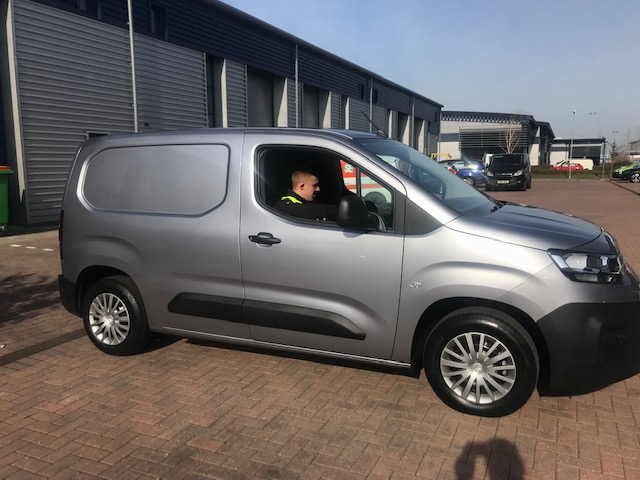
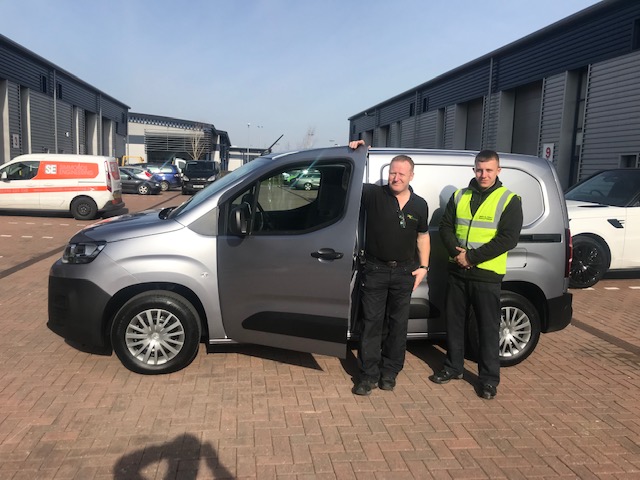
“Bird and Pest Solutions Ltd have just taken delivery of their brand new Citroen Berlingo Enterprise from Cheshire Fleet Solutions. The Van was delivered bang on time as promised and my old van taken away. Great service and great Van would recommend Matt at Cheshire Fleet Solutions to anyone looking for a reliable hassle free service.”

delivery of new van to Bird Pest Solutions
Delivery of new van to client

If you would like to find out more about our vehicle delivery or fleet management services, why not drop us a line on 07971 865102