New – Clean-Air Zone Friendly – Mitsubishi L200 Pick-Up On Sale

New – Clean-Air Zone Friendly – Mitsubishi L200 Pick-Up On Sale

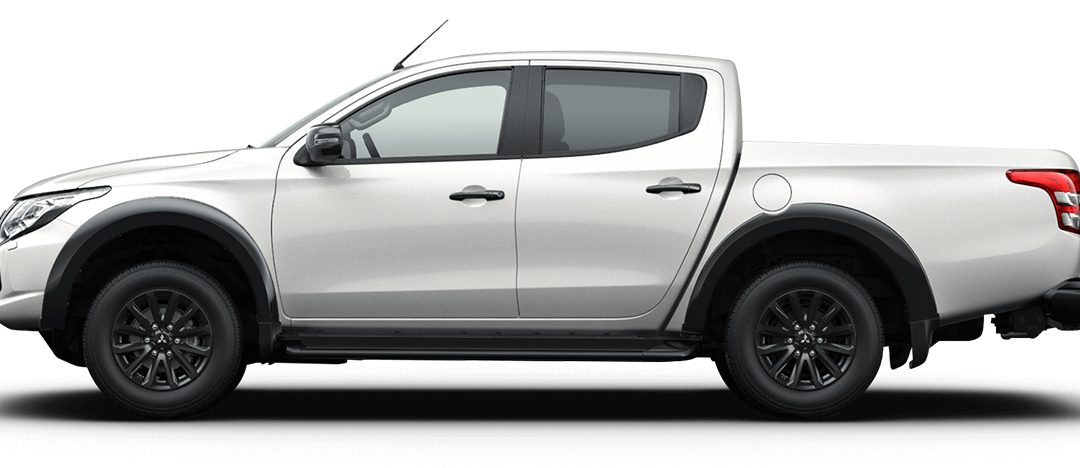
Following on from our recent article about the Greater Manchester Clean-Aid zone – more and more popular vehicles are getting the necessary upgrades. The latest is the ever-popular Mitsubishi L200 pick-up truck which has not only been revised to offer increased safety equipment but also comes with a new Euro 6d diesel engine – compliant with the new clean-air zones.  

What are the main changes with the L200?

As well as the new Euro 6d-compliant, the new L200 comes with a new 2.3-litre turbo diesel engine and a new six-speed automatic gearbox, while larger brakes all-round are fitted to the majority of the range.

Priced from £21,515 for the entry-level 4Life Club Cab variant, the L200 Series 6 also offers an increased payload of 1,080kg (up from 1,045kg-1,060kg) and gross train weight of 6,155kg, as well as an upgraded four-wheel drive system which incorporates a new ‘off road mode’ and hill descent control system.

What else is included in the new Mitsubishi L200?

  • Blind spot warning system with lane change assist function
  • Rear cross traffic alert
  • Forward collision mitigation
  • Lane departure warning
  • Hill start assist
  • Emergency stop signal
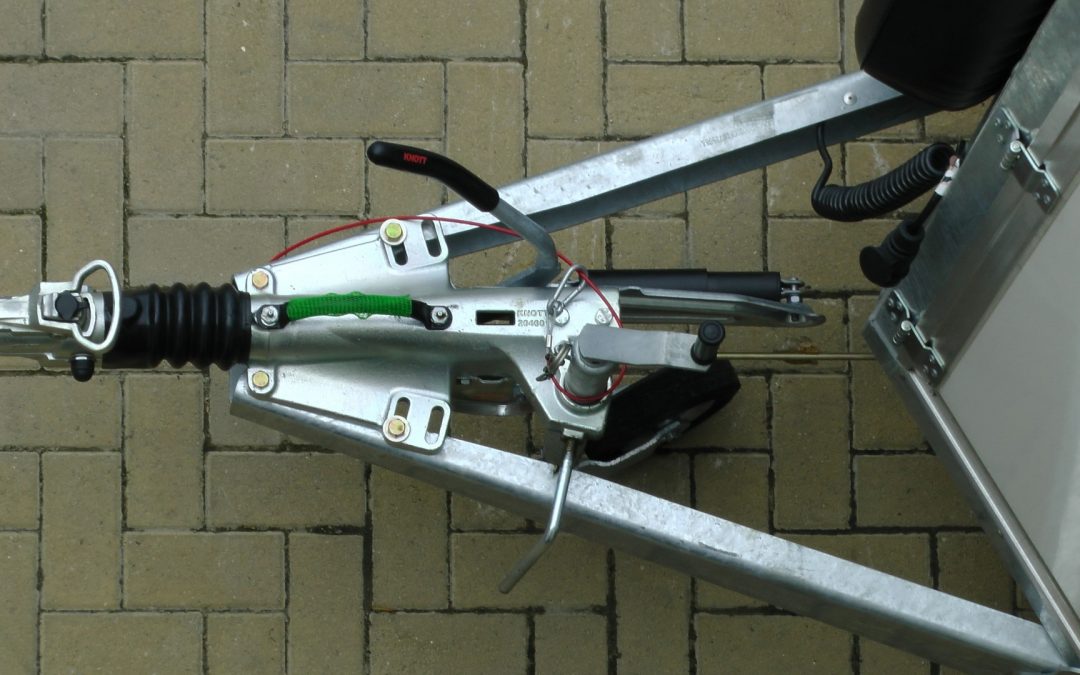
  • Trailer stability assist.

Styling changes include a new front-end, a 40mm raised bonnet for easier manoeuvring, LED headlamps and LED driving lights on the majority of the range, and squared off wheel arches.

Interior updates include revised seating with improved bolstering, new instrumentation, including a full-colour LCD display, and a chunkier steering wheel.

If you would like to find out more about the different finance deals available on the new Mitsubishi L200 Pickup then feel free to contact us – or give us a call on 01543 229722.

New Aston Martin “Volante Vision” Aims to Bring Luxury Personal Air Mobility

New Aston Martin “Volante Vision” Aims to Bring Luxury Personal Air Mobility

Nearly all the old Sci-fi movies saw flying cars as an absolute shoe-in by now. Despite this, reality has always to seemed to ensure that flying cars cannot be made remotely practical.

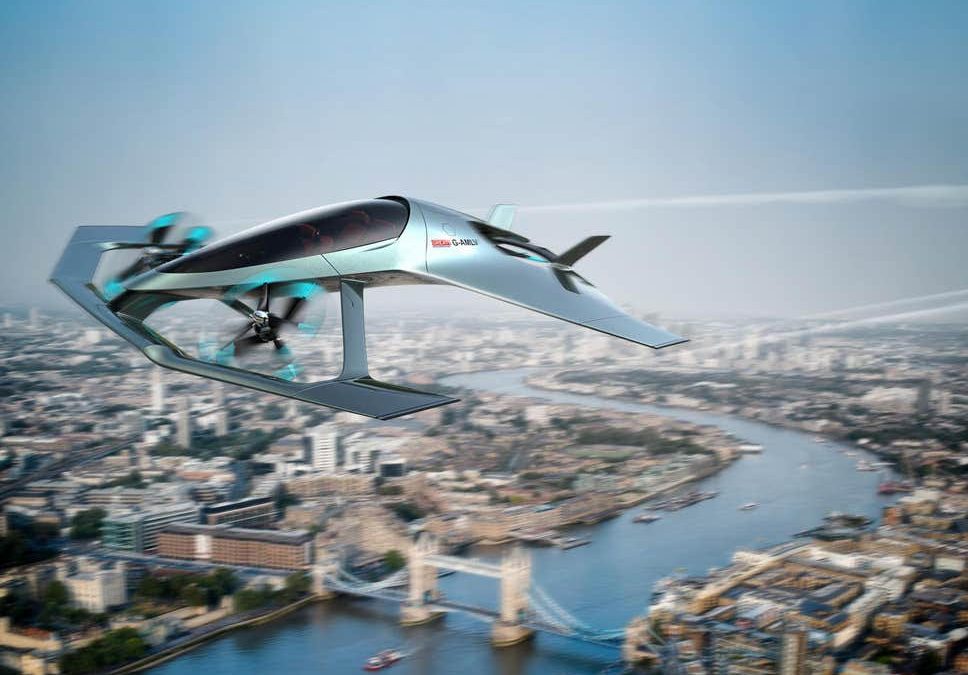
Recently the new Aston Martin “Volante Vision” concept emerged – which is actually a light aircraft rather than a “flying car” – and despite some pretty nifty realistic looking images – it is still hard to see past it being nothing more than something for James Bond movie – or a one-off play-thing for some bored multi-multi-Billionaire rather than “the future of personal transport”.

How realistic is it?

But… Aston Martin are taking it seriously. They have worked with Cranfield University, Cranfield Aerospace Solutions and Rolls-Royce plc (the air engine company, not the car-making division) to look at a way of making this the future of “luxury personal air mobility”.

It is a concept designed for every-day use. For urban areas it features vertical take-off and landing (VTOL) capabilities,similar to a Hawker Harrier “jump” jet – technology that has actually been around since the 1960’s.

In true Aston Martin fashion – it’s green too, albeit in the sense that it is conceived with hybrid power, combining an internal combustion engine and an electric motor, for inter-city rather than inter-continental travel.

Will It Take Off? (Pardon The Pun!)

This isn’t the first concept like this – and it won’t be the last. Getting the technology right so that it is practical (and affordable) are the main obstacles to overcome. However – you think about any piece of technology and the same could be said of those – from personal computers and video players to the Electric Car – and we’re still only part of the way there with that with what can be achieved!

So in our opinion, we think it’s inevitable something like the Aston Martin Volante Vision will become a reality – and possibly for the mainstream. With the names getting involved in this project, you would also have to say it is probably only a couple of decades away too. 

Do you think this is the future – or is it just a fantasy pipeline best left to James Bond movies? Leave your comments below.


Is Your Vehicle Exempt From The Upcoming Manchester Clean Air Zone Charge?

Is Your Vehicle Exempt From The Upcoming Manchester Clean Air Zone Charge?

What Is The GM Clean Air Zone?

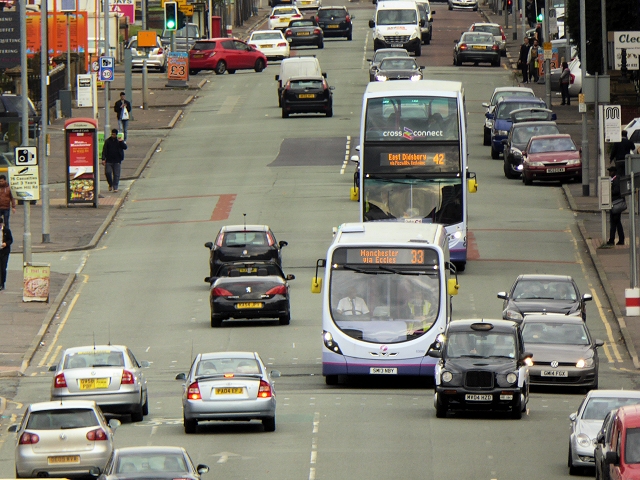
Most major cities up and down the UK are looking ways of becoming greener and cutting emissions. Manchester is one of them. 

This means if you, or your company are making regular visits in to the upcoming Clean Air Zone you could be liable to a daily charge which is currently touted as; 

  • Buses, coaches and HGVs – £100 (from 2021)
  • Taxis and private hire vehicles – £7.50 (from 2021)
  • Vans and minibuses – £7.50 (from 2023)

If the daily penalty is not paid, a PCN payment of £120 is proposed which would be in addition to the original daily penalty.

This could obviously have a significant impact on a small business – particularly if you have a few vehicles regularly travelling into the zone.

How To Find Out If Your Vehicles Are Compliant

We have found a tool where you can quickly establish if your vehicle is compliant or not. If you click on the button below you will be taken to the vehicle checker section of the Clean Air Greater Manchester website. 

If you find out your vehicles AREN’T compliant, then if you come back to us, fill in the form below and we will contact you to advise what your options are.

If your vehicles are liable for the charge, fill in the form below...

How we use your data

13 + 15 =

Government Say There Will Be No Company Car Tax on Electric Cars

Government Say There Will Be No Company Car Tax on Electric Cars

Excellent News (At Last!) For Company Car Drivers

Company car drivers choosing a pure electric vehicle will pay no benefit-in-kind (BIK) tax in 2020/21 the Governement revealed this week.

After the long-awaited review of WLTP and vehicle taxes, The HM Treasury has shelved the previously published BIK rates for 2020/21.

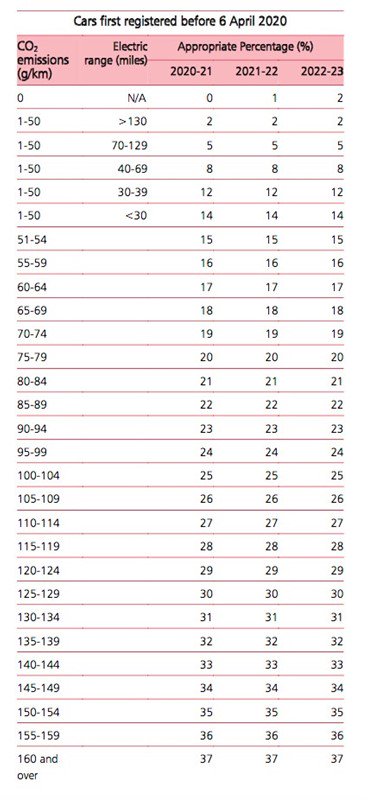
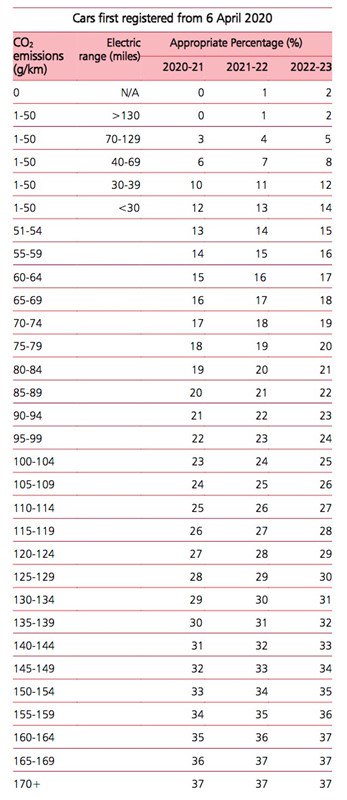
There are two new BIK tables for company car drivers; a table for those driving a company car registered after April 6, 2020, and one for those driving a company car registered before April 6, 2020 (see below).

 Table 1 of BIK company car taxTable 2 of BIK company car tax

How The Changes Will Be Implemented.

For cars first registered from April 6, 2020, most company car tax rates will be reduced by two percentage points.

Company car drivers who have Electric vehicles with zero tailpipe emissions will be taxed at 0% –  paying no BIK tax at all.

Furthermore, the zero percentage rate is also extended to company car drivers in pure electric vehicles registered prior to April 6, 2020, who were already looking forward to a much reduced rate of 2% for 2020/21.

For company cars registered from April 6, 2020, with emissions from 1-50g/km and a pure electric mile vehicle with a range of 130 miles or more – the zero percentage rate will also apply.

Will There Be Increases?

In both these cases, in 2021/22 they will increase to 1% and then 2% in 2022/23.

For pure electric company cars registered before April 6, 2020, will also increase to 1% and 2% in subsequent years, 2021/22 and 2022/23.

However, company cars registered before April 6, 2020, with emissions from 1-50g/km and a pure electric mile range of 130 miles or more attract a 2% BIK rate in 2020/21 and stay the same for the two subsequent tax years.

From 2023/24, fleets will have one BIK tax table again as the rates are realigned.

What The Government Has Said

“by providing clarity of future the appropriate percentages, businesses will have the ability to make more informed decisions about how they make the transition to zero emission fleets”.

“Appropriate percentages beyond 2022-23 remain under review and will be announced at future fiscal events.

“The Government aims to announce appropriate percentages at least two years ahead of implementation to provide certainty for employers, employees and fleet operators.”

So what does this all really mean to the company car driver?

We are being told that by 2040 you won’t be able to buy a new combustion engine car which is why there seems to have been an explosion of electric vehicles in both full totally electric or hybrid form and this will continue to grow in numbers. So the choice is getting better and the incentives from the government are increasing.

It is time to switch and as a company offering company cars as part of their package do you understand how it can help reduce cost and create a better carbon footprint.

Most companies and their drivers that we speak to don’t really understand what is the best way forward and lets be honest it is a complicated process.


How To Make The Switch

We are very interested in talking to companies who want to look at this in more detail and explore the possibilities of making the change. If you would like to find out more about this then complete the details below and we’ll give you a call. Or email us for more details.

How we use your data

14 + 7 =

Towing Work Trailers? Are You Breaking The Law?

Towing Work Trailers? Are You Breaking The Law?

Fleet Operators Warned About Towing Trailers.

Fleet operators and drivers are being warned by the License Bureau to ensure they understand the law relating to towing loads.

There are around 4,000 reported incidents a year involving all forms of trailers, according to the Bureau and they say it is crucial operators do not fall foul of the law.

The Licensing Bureau say that the actual date on which an individual passed their test – and the trailer they are towing – seems to be the cause of most of the confusion

What Are The Rules?

Drivers passing their test on or after January 1, 1997, will have a Category B licence. This means they can drive vehicles up to 3,500kg maximum authorised mass (MAM) with up to eight passenger seats (with a trailer up to 750kg).

These drivers can also tow heavier trailers if the total MAM of the vehicle and trailer is not more than 3,500kg.

If however, a driver has a Category BE licence they can drive a vehicle with a MAM of 3,500kg with a trailer. The size of the trailer depends on the BE ‘valid from’ date shown on the licence. If the date is: before 19 January 2013, they can tow any size trailer; on or after 19 January 2013, they can tow a trailer with a MAM of up to 3,500kg.

Malcolm Maycock, managing director of Licence Bureau, said:

“This is a complex area due to the different variations in licences and their respective entitlements. It’s also an area that arguably bypasses many businesses, as well as individuals, due to working age demographics and a legacy understanding.

“However, chances are that this area is at its most prolific right now as the transitional licence demographic takes on driving and towing responsibilities.”


The Implications For Your Business

The licence offence for the driver carries a minimum fine of £100 and three penalty points. From a company viewpoint however, the damage can have wider implications, as compliance is compromised and insurance invalidated.

Maycock goes on to say;

“Ultimately, the responsibility for ensuring any work-related journey meets compliance standards is that of the fleet or human resource manager.

“Quite simply they need to make sure licence checks are carried out correctly, drivers are aware of what they can and cannot drive, and operational procedures are developed to suit.”

Ensuring You Comply

To minimise the risk – the License Bureau has given the following checkpoints to help Fleet Managers and companies ensure they are complying:

  1. Treat everyone as not entitled to drive until you have confirmed they are.
  2. Identify which vehicles are fitted with tow bars – this needs to include company cars where the towing is outside the workplace for pleasure such as caravans and horseboxes. They are still your vehicles.
  3. Confirm who will drive as you are possibly allowing non-employees to drive them when not at work.
  4. Invest in training. Any driver towing a trailer needs training as this is a tool of work and unless they have passed B+E after 1997 will not have had any.
  5. Ensure the driver has current competence in towing.
  6. Check if the trailer in question, when being used commercially, has any secure load issues.
  7. Risk assess the vehicle. The vehicle manual will specify the maximum trailer weights.
  8. Risk assess the trailer and ensure the weight is suitable for the vehicle.
  9. Risk assess the drivers against the vehicle/trailer combination.

Does your company regularly tow trailers? Are you now unsure as to whether you comply? Would you need help actioning these points? If so, call us on 07971 865102  or email us for more details.

Are Plug-In Hybrid Electric Vehicles (PHEV) The Way Forward?

Are Plug-In Hybrid Electric Vehicles (PHEV) The Way Forward?

Ford Believe That PHEV’s Are The Ideal Solution.

It seems that Ford have concluded that plug-in hybrid electric vehicles (PHEVs) are “the ideal solution” for urban and extra urban operations, as it moves into the latter stages of its pilot programme with 15 fleet operators.

The trial, which started in London a year ago, is supported by a £4.7 million grant from the Government-funded Advanced Propulsion Centre.

Ford’s PHEV Vans

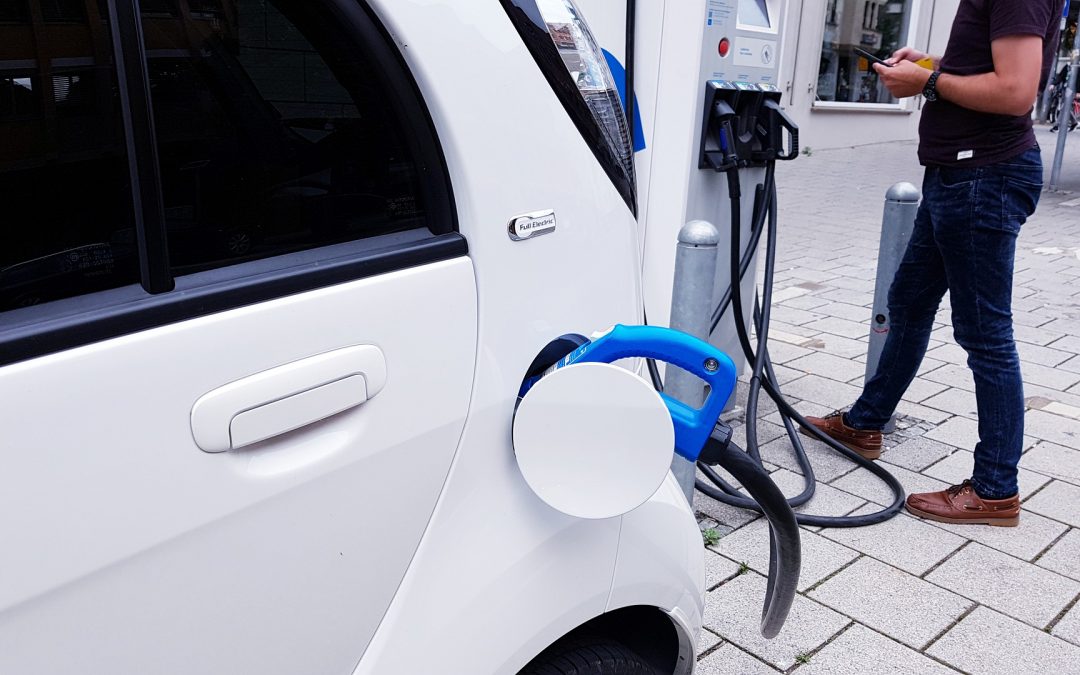
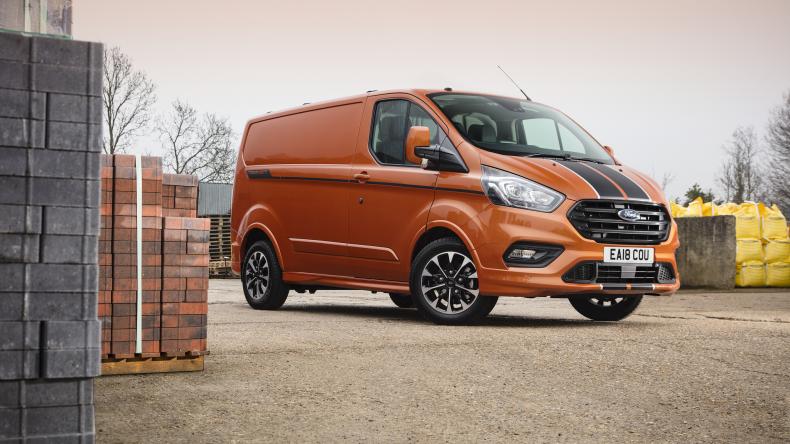
It involves 20 Transit Custom PHEV vans which are powered by a lithium-ion battery, capable of 31 miles of zero-emissions travel, with Ford’s 1.0-litre Ecoboost petrol engine operating as a range extender. The engine does not drive the wheels, it simply helps charge the on-board batteries on the go.

The battery pack is located under the floor so the Custom PHEV offers the same load volume as the standard van, with a one-tonne payload capacity.

The test fleets varied from taxi firm Addison Lee to the Met Police and delivery operator DPD to Heathrow Airport. Each took delivery of vehicles at different points over the trial period but all will run them for a full 12 months.

The Results Of The Test

Ford has now analysed the data from more than 110,000 miles of driving. It found that the vehicles ran on electric-only for 35% of the time in total, rising to 49% in greater London and 69% in central London. Average daily mileage ranged from less than 20 miles to 110 miles.

Mark Harvey, director Ford Commercial Vehicle Mobility Solutions, said

“It’s the right answer for urban vehicles because they are zero-emission capable and have no compromise on range, volume or capacity,” 

The Custom has four modes: EV Auto (where the best mode for the journey is selected), EV Only (electric only), EV Later (petrol only, conserving the battery for later use) and EV Charge (which recharges a depleted battery during higher speed driving, such as on the motorway).

By making adjustments to the way drivers used the electric powertrain, particularly for those commuting into the city for business, fleets were able to squeeze much higher usage from zero emissions travel.

Harvey continues…

“One driver started using EV Only mode from the start of his journey but he had no home charging so he was only starting with 35% charge. The battery was running for 35.8 km (22 miles) a day and the range extender for 121 km (75 miles).

“We gave him some training so he started the day using EV Charge to recharge the battery, then switched to EV Only in central London. This gave him 75 km (47 miles) of pure EV.”

The Custom PHEV will go into full production towards the end of the year with first customer deliveries expected early 2020.

Improvements Made Following The Test

Ford has made a number of enhancements following the pilot, including installing a more powerful 13.6kWh battery. This will enable full charging within three hours via rapid charge (22kWh) and five hours on domestic (7.2kWh)

It has also improved the feedback information on the driver displays and moved the charging point to the front bumper for better access. Further trials are due to begin this year in Cologne, Germany, and Valencia, Spain.

Harvey said the total cost of ownership model varies dependent on usage – Ford is “still working on” establishing the ‘sweet spot’ for daily/weekly mileage – but it could be comparable to diesel alternatives. Additional savings can be achieved if operating inside the London Congestion Zone.

Ford has kept in close contact with the residual guides and is hopeful the Transit Custom PHEV will get strong values, expected to be revealed within the next couple of months.

Future Developments of the Ford PHEV Range

The PHEV will be extended to an eight-seat Tourneo Custom people mover version later this year with an EV-only range of 31 miles (total range of 310 miles). Official fuel consumption is 85mpg, with CO2 emissions of 75g/km.

Ford has also outlined plans to join the growing throng of manufacturers with a full electric 3.5-tonne light commercial vehicle, although its BEV Transit will not be launched until 2021, more than a year after the Volkswagen Crafter and Mercedes-Benz Sprinter and two years after the Renault Master.

Roelant de Waard, Ford of Europe vice president of marketing, sales and service, said an electric van was “critical for urban areas”.

He described the electric Transit as a “fleet owner’s dream”, adding that it would be available in multiple body styles with no compromise on payload (one tonne).

No details on range are available, although de Waard said:

“We see this van as last mile for inner city use. Professional operators don’t want to pay for what they don’t use so we have to tailor the range.

“If they don’t need more than 80km, they won’t want to pay for 200km. You need a lot of batteries for long range and they are expensive.”

He also outlined details of a two-tonne Transit Custom mild hybrid, which will be launched later this year, promising to improve urban fuel efficiency by up to 8% compare with the 2.0-litre diesel equivalent.

Would you like to find out more about PHEV Cars available? Call us on 07971 865102 for the latest deals on electric and hybrid cars.